
 EN
EN
When choosing a smart lock, most of us focus on the physical side: Is the cylinder pick-resistant? Is the panel tamper-proof? However, in the era of IoT-enabled smart homes, a quieter, invisible battle is being fought—the battle for Data Privacy.
When your fingerprints, entry logs, and access credentials are converted into digital code, how are they stored? Can hackers intercept your data while it travels to your mobile app? Today, we go beyond the technical jargon to explore how modern smart locks guard your digital footprint through "Sector Encryption" and secure Cloud Communication.
1. The Core of Local Defense: What is "Sector Encryption"?
Many users opt for smart locks that support IC cards or key fobs—especially for elderly family members or children whose fingerprints may be difficult for sensors to read. In these cases, the local storage security of the card becomes paramount.
High-security smart locks commonly employ "Sector Encryption" technology.
What is Sector Encryption?
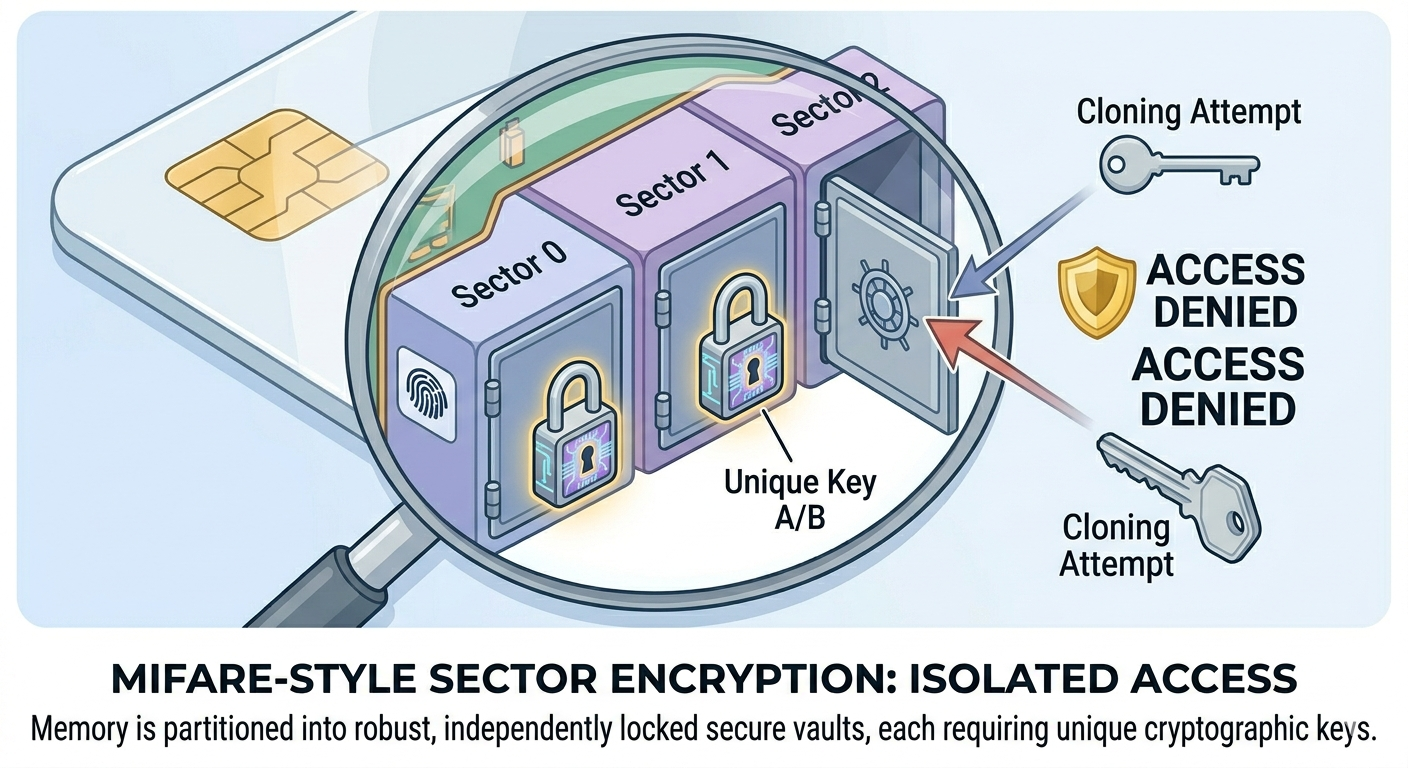
Think of your IC card’s internal storage as a large office building. A standard, unencrypted card is like an open lobby—anyone can walk in and read everything. These cards are easily cloned by inexpensive, low-end card readers found on the market.
Sector Encryption, however, partitions the card’s storage space into several independent, "sealed rooms" (sectors).
Each sector operates independently.
More importantly, each sector is protected by its own unique, isolated keys (Key A and Key B) that perform a two-way handshake verification.
Why does this kill the "Cloning" threat?
Illegal cloning devices often try to copy a card's ID number. Under a Sector Encryption mechanism, when the smart lock reads a card, it doesn't just check the surface ID; it tunnels deep into the specific encrypted sector to perform a "digital handshake." If the keys do not match, or if the encrypted data within the sector is incomplete, the lock immediately identifies the card as fraudulent and denies access. This hardware-level physical isolation ensures your data cannot be easily skimmed or replicated.
2. Cloud Communication: How Data Stays Invisible in Transit
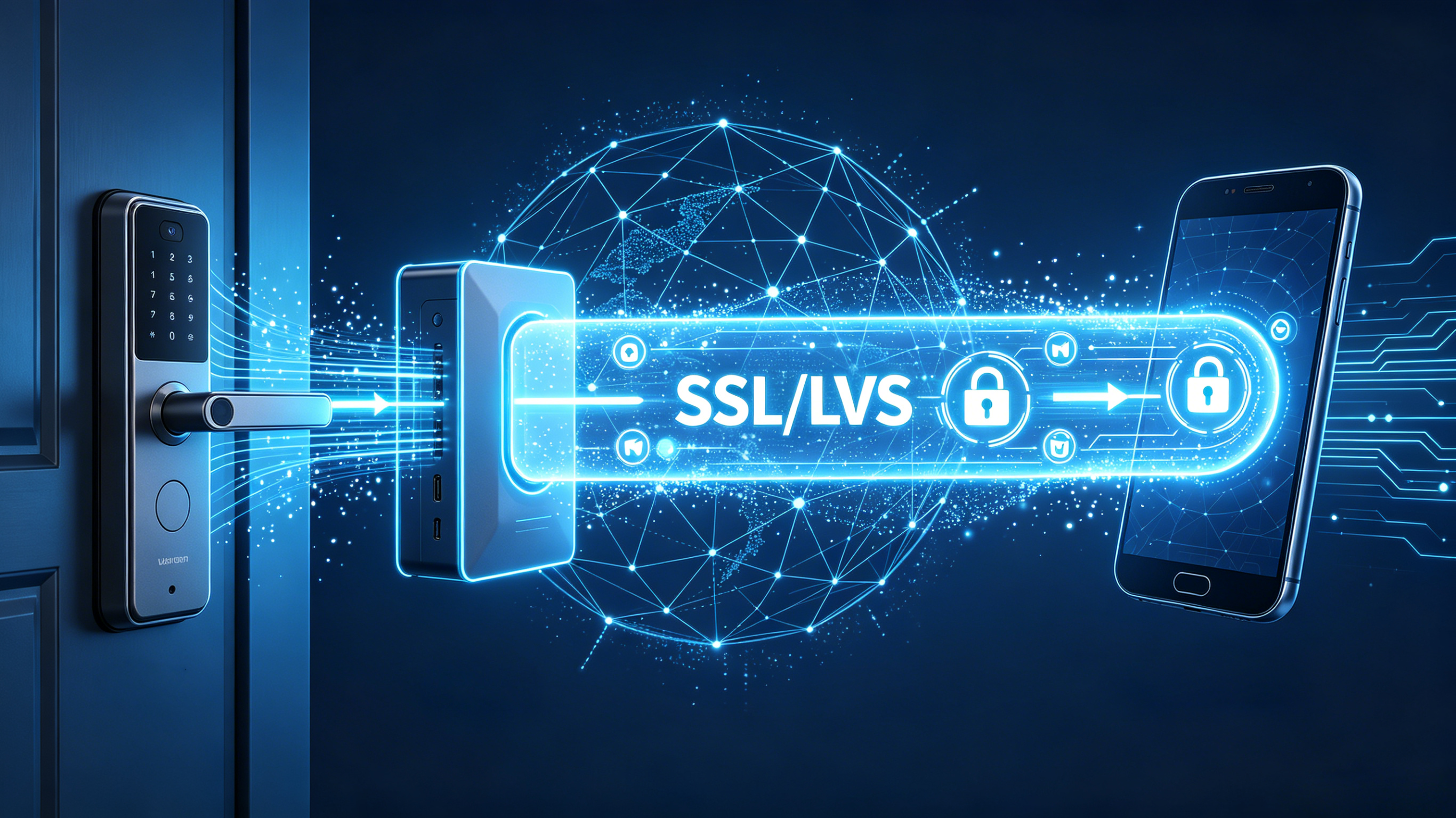
Beyond local access, users are often concerned about "Cloud Communication." When you check your entry logs or receive alerts remotely, your data travels from your lock, through your gateway, to the cloud, and finally to your smartphone.
How do modern smart locks prevent "sniffers" from intercepting this data?
Dynamic Token Mechanism
Smart locks never transmit a raw password like "123456" over the air. Instead, they use Dynamic Tokens. Every communication generates a one-time, randomized code that is valid only for a split second. Even if a hacker intercepts this signal, the code becomes "digital trash" milliseconds later.
SSL/TLS Transmission Protocols
Data in transit is wrapped in secure, encrypted channels (similar to the protocols used by online banking). This ensures that data traveling over the public internet between your gateway and the cloud server remains in a "scrambled" state. Without the unique private key held by the secure cloud server, any third party or hacker sees only incomprehensible noise.
3. Global Buyer’s Guide: Tips for Privacy-Conscious Users
If you are shopping for a smart lock on an international site, look for these practical indicators to ensure your privacy is protected:
Confirm IC Card Sector Encryption: Check the product specifications for mention of "Sector Encryption" or "Anti-cloning IC card support." Avoid basic ID cards that lack encryption, as these are highly vulnerable.
Prioritize Regulatory Compliance: Choose products that align with major global privacy standards, such as the EU’s GDPR or the US’s CCPA. These certifications indicate that the cloud platform adheres to strict data handling and protection laws.
Local Log Management: Opt for locks where biometric templates (the mathematical representation of your fingerprint) are stored locally in a secure chip and are not uploaded to the cloud.
Smart locks have liberated us from the fear of losing physical keys, while advancements in chip technology have built invisible firewalls for our data. At Jijia Intelligent Technology, we integrate safety DNA into every physical sector and every cloud handshake. We believe that intelligence should bring convenience, and security should leave no loopholes.