
 EN
EN
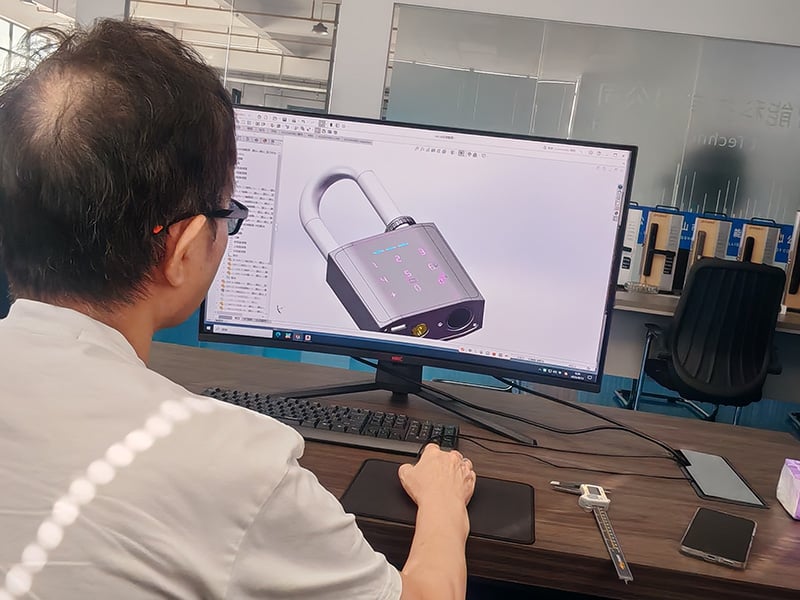
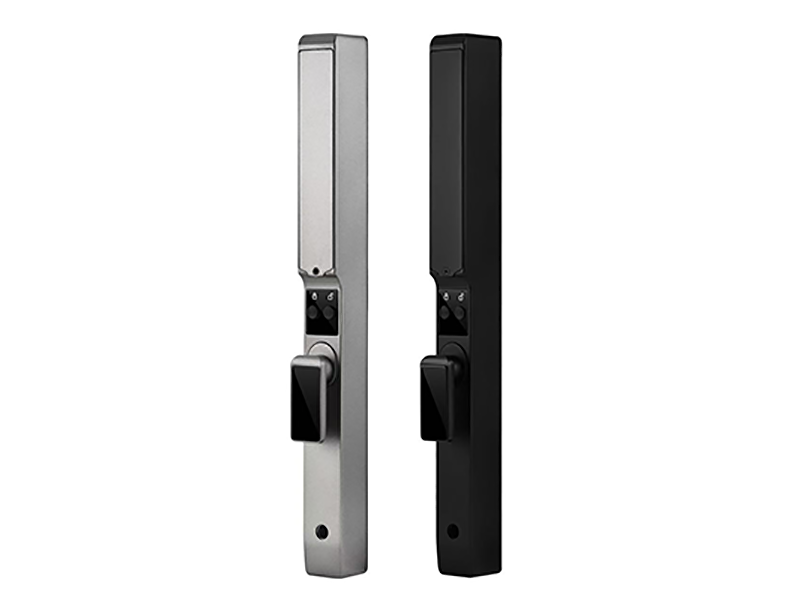
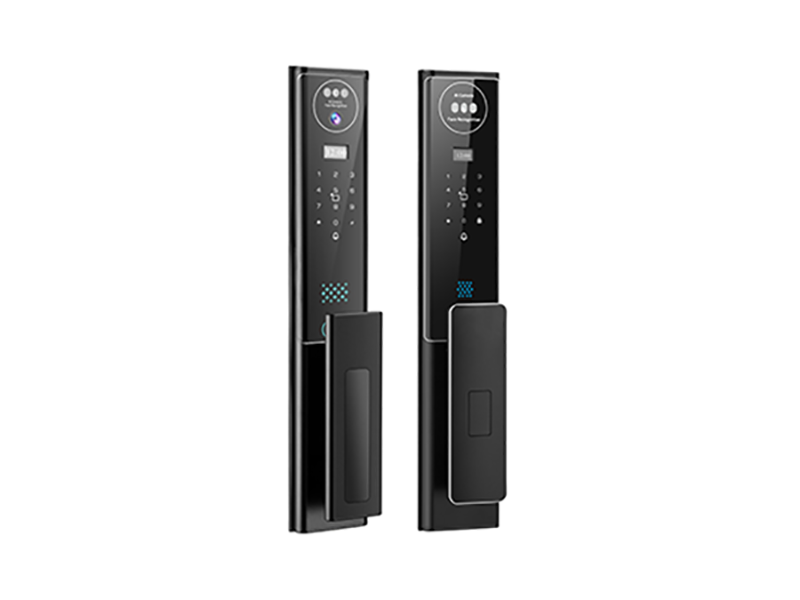
In today's era of rapid smart home adoption, smart locks have become the first line of defense for modern home security. Faced with an overwhelming variety of products on the market, consumers often face the same dilemma: Should I choose a fingerprint lock or a facial recognition lock? Which identification method perfectly aligns with the actual needs of your household? This article will provide a deep comparison of these two mainstream smart locks across four dimensions: technical principles, convenience, security, and target audience.
1. Differences in Technical Principles
* Fingerprint Locks: Currently, the mainstream uses "semiconductor biometric technology." By collecting a user's living fingerprint via a sensor and converting it into digital signals, the system compares it against stored information. Semiconductor technology has long been mature and stable due to its high anti-counterfeiting capabilities and living tissue detection.
* Facial Recognition Locks: These are usually based on 3D structured light or binocular infrared imaging technology. By collecting a user's facial depth information, the system builds a high-precision 3D model. Even in low-light environments, infrared fill light allows for millisecond-level recognition with high biomimetic security.
2. Convenience Analysis: Which is More "Seamless"?
* Fully Automatic Operational Experience: Whether it is a fingerprint or facial recognition lock, the vast majority of products on the market now support "auto-locking" and "motor-driven unlocking."
* Recognition Speed and Workflow:
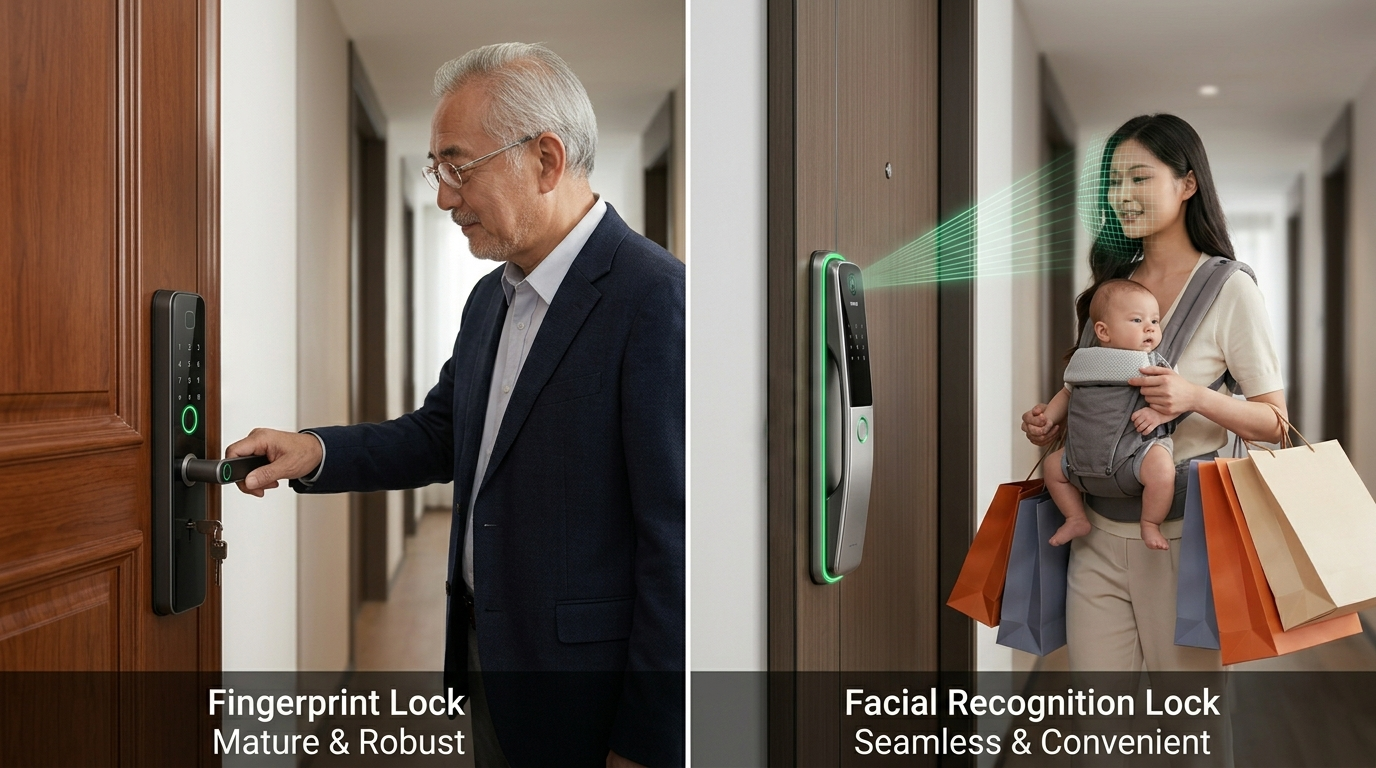
* Fingerprint locks require users to reach out and touch the sensor. While this takes only a second after becoming accustomed to it, recognition rates may fluctuate for users with peeling fingerprints, severe wear, or moist fingers.
* Facial recognition locks achieve truly "seamless entry." As the user approaches the door, the system automatically wakes up and recognizes them, requiring zero manual action. For families with children in their arms or carrying heavy bags, the convenience advantage is extremely clear.
3. Security Comparison: Data Protection and Prevention
* Common Security Standards: Both types reach high levels of core security design. For example, mainstream brands are equipped with local biometric template storage, SSL/TLS secure communication channels, and hardware security modules.
* Considerations in Specific Scenarios:
* Fingerprint locks have already passed global GDPR/CCPA compliance standards regarding privacy protection, with all data processed locally on the lock rather than uploaded to the cloud.
* Facial recognition locks resolve pain points for specific groups, such as the elderly with worn fingerprints or children whose fingerprints are not yet fully developed. This reduces the need to frequently use passcodes due to recognition failure, thereby lowering the risk of password leakage.
4. Target Audience Recommendations
The choice depends primarily on your household composition:
* Families Recommended for Fingerprint Locks:
* Budget-Conscious: Fingerprint lock technology has been in development longer and the supply chain is highly mature, offering higher cost-efficiency at the same security level.
* Seeking Extreme Stability: If family members have clear fingerprints and prefer direct mechanical interaction, fingerprint locks remain the most robust and widely used choice globally.
* Families Recommended for Facial Recognition Locks:
* "High-Load" Households: Families that frequently carry pets, grocery bags, or hold infants will find the "hands-free" convenience of facial recognition a necessity.
* Households with Specific Groups: For elderly family members or children who may struggle with fingerprint sensors, facial recognition can significantly reduce the difficulty of operation.
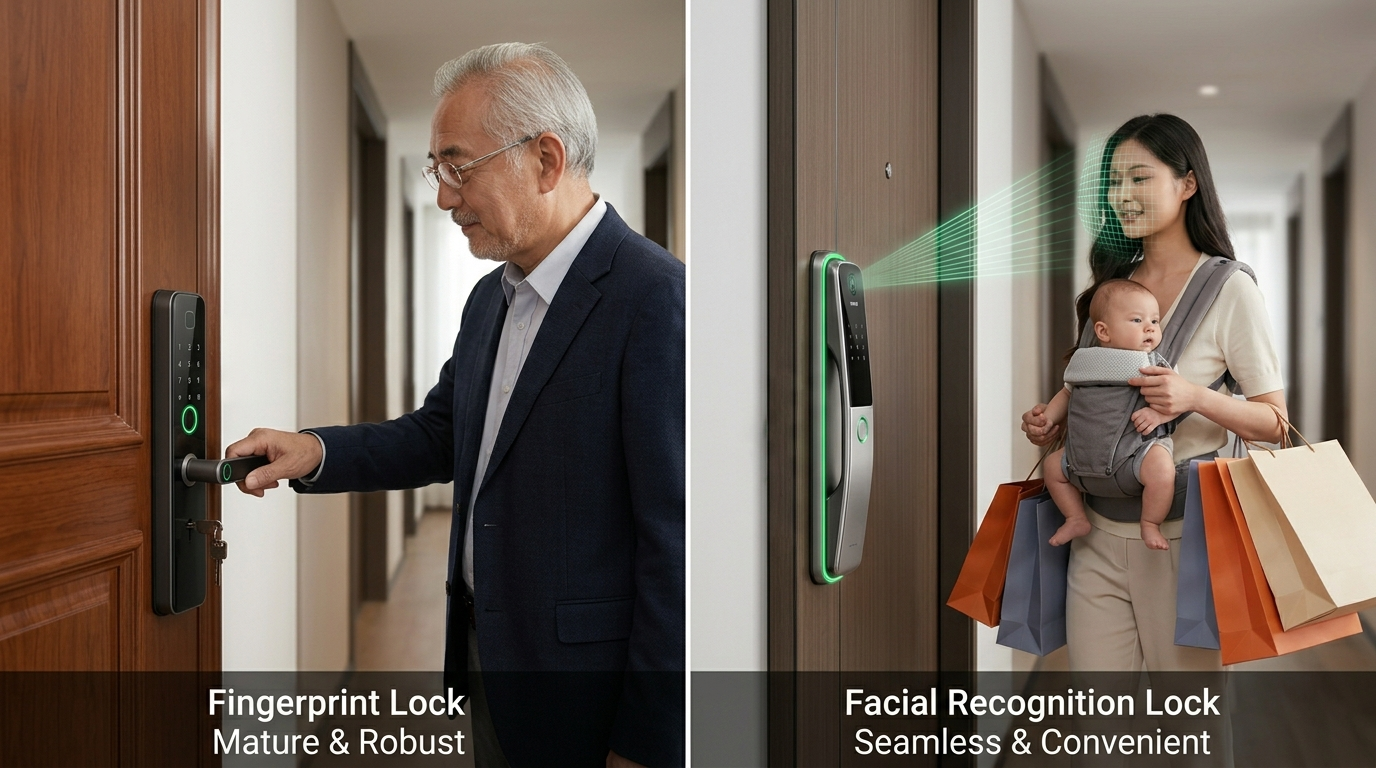
There is no absolute superiority between fingerprint locks and facial recognition locks; they simply provide different solutions for different lifestyles. Fingerprint locks, with their high cost-efficiency and extreme maturity, remain the cornerstone of the smart lock market, while facial recognition locks represent the future of smarter, more seamless entry experiences.
Regardless of your choice, it is recommended that you prioritize brand qualifications, the lock cylinder grade (C-level is the standard), and whether the product features a secure local data storage module. A smart lock that fits your family will not only improve your convenience but also safeguard the security of you and your loved ones.