
 EN
EN
In today’s smart home era, door locks are no longer just about "one key for one lock." We have evolved from simple keypads to ubiquitous fingerprint scanners, and now to the cutting-edge "Palm Vein" recognition.
But have you ever wondered: Why can some locks be tricked by a simple photo, while others offer "bank-grade" security? Today, we take a deep dive into the science behind biometric security levels.
1. The Evolution of Fingerprint Recognition
Fingerprint recognition is the most common solution in the smart lock market, but even within this category, there is a strict "hierarchy of security."
Optical Fingerprint Recognition (Level 1)
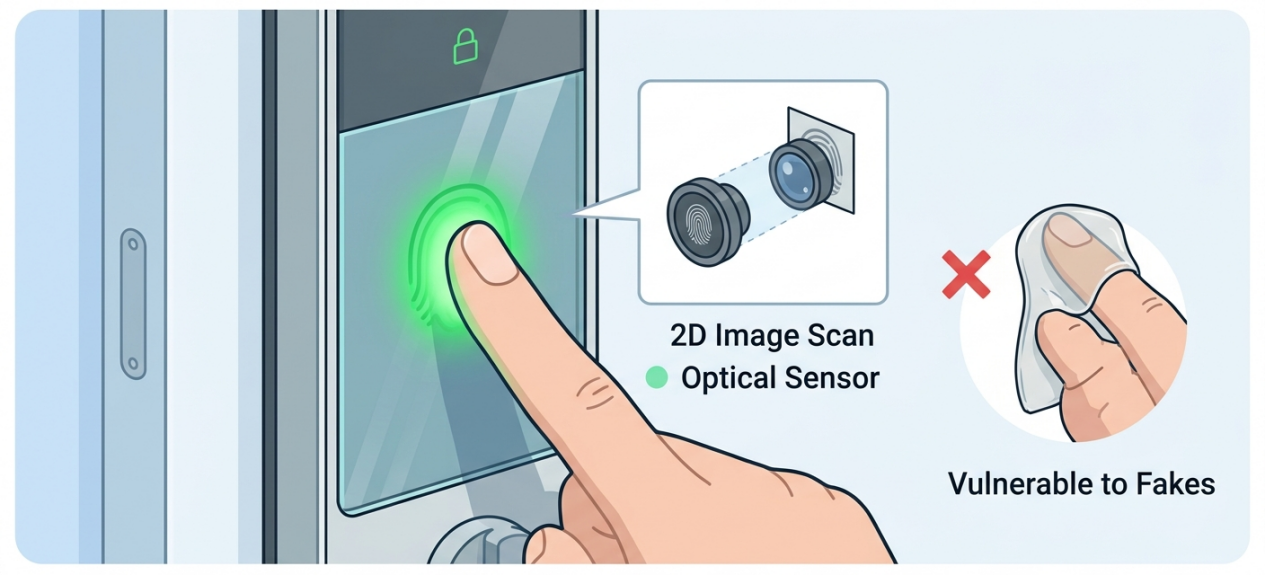
This technology essentially takes a "photo" of your fingerprint. It records the ridges and valleys by detecting light reflection.
The Downside: Since it only captures surface-level geometric features, it is easily fooled by high-resolution fingerprint photos or silicone molds. This was the source of early concerns regarding "fake fingerprint hacking."
Semiconductor (Capacitive) Fingerprint Recognition (Level 2)
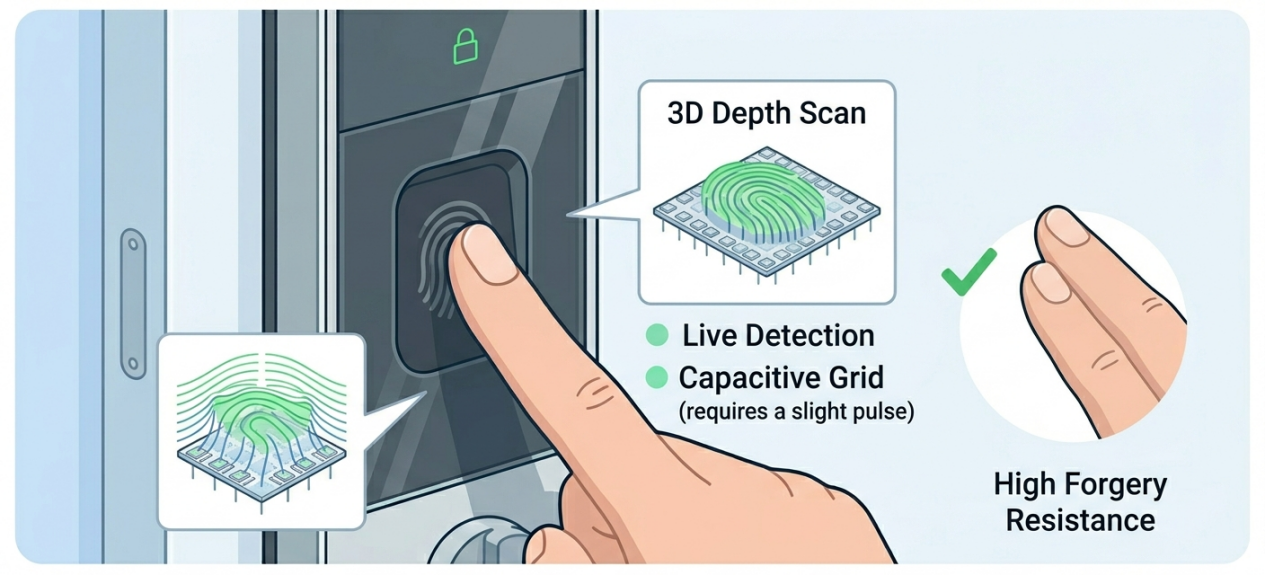
This is the current mainstream choice for mid-to-high-end smart locks. It uses electrical currents to sense the unique plate capacitors formed by your fingerprint.
The Advantage: It features live detection because it requires a biological electrical charge. Photos or dead skin molds cannot bypass this.
The Limitation: For the elderly with shallow prints, children whose prints aren't fully developed, or users with sweaty or peeling fingers, the False Rejection Rate (FRR) can increase significantly.
2. The Cutting-Edge: Why Palm Vein Recognition is the "Security Ceiling"
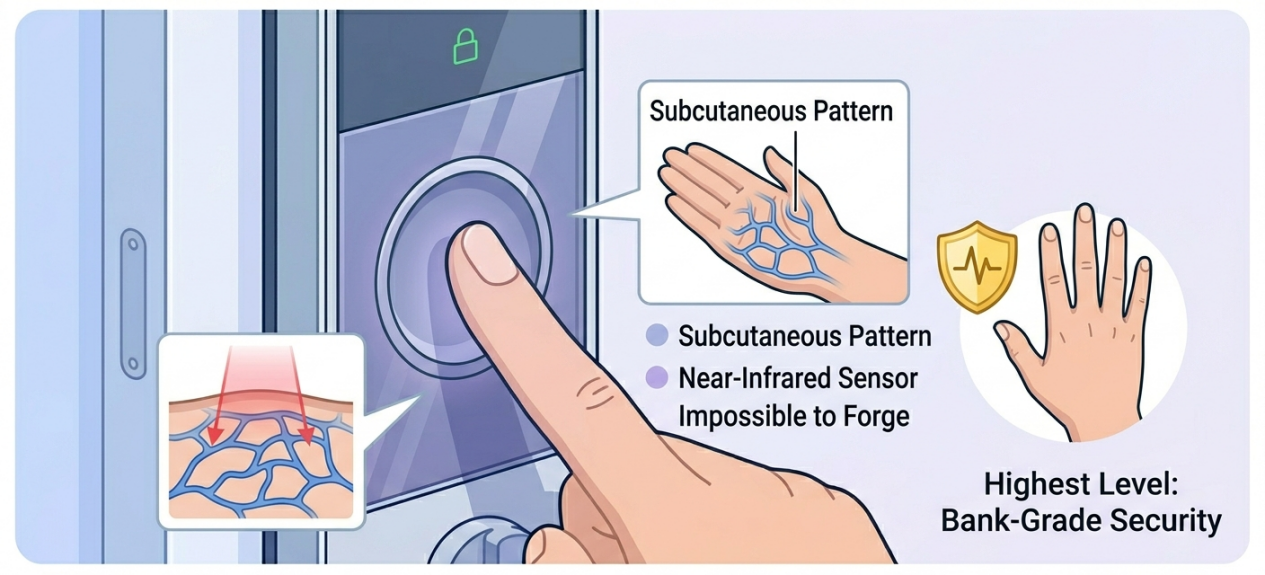
If fingerprinting is a battle on the "skin layer," then Palm Vein recognition is a contest of the "subcutaneous tissue." This is the high-tier solution currently used in bank vaults and premium smart locks.
How does it work?
Palm vein recognition uses near-infrared light to scan the palm. The deoxidized hemoglobin in our blood absorbs these rays, creating a unique map of the vein patterns under the skin.
Three Core Security Advantages:
Impossible to Duplicate: Vein patterns are internal and invisible to the naked eye. They cannot be photographed, copied, or forged, resulting in a False Acceptance Rate (FAR) as low as 0.00001%.
True Live Detection: Blood must be flowing to form a clear vein image. This means "non-living" attempts are useless against palm vein sensors.
Universal Accessibility: Unlike fingerprints, palm veins remain consistent regardless of skin dryness, sweat, scars, or aging. It offers a "seamless entry" for both the elderly and children.
3. The Gold Standard: Understanding FAR vs. FRR
When researching smart locks, you will encounter two critical metrics that define security levels:
FAR (False Acceptance Rate): The probability that the system incorrectly accepts an unauthorized user. Lower is safer.
FRR (False Rejection Rate): The probability that the system rejects the authorized user. Lower is more convenient.
Security Hierarchy Ranking:
Palm Vein > Semiconductor Fingerprint > Optical Fingerprint > Traditional Mechanical Lock
4. Buying Guide: Choosing the Right Level for Your Needs
You may not always need the highest level of security, but understanding the differences helps you make a smarter investment:
For Value Seekers: Semiconductor fingerprint locks are sufficient for most standard apartment security needs.
For Households with Elderly or Children: We strongly recommend Palm Vein Recognition. It solves the pain point of "unreadable fingerprints" and offers a more hygienic, touchless experience.
For Outdoor Environments (Villas/Gates): Look for locks with high waterproof ratings (IP66+) and palm vein or 3D Face ID, as fingerprints often fail in wet or humid conditions.
The evolution of biometric technology is a quest for the perfect balance between convenience and security. From fingerprints to palm veins, the method of unlocking changes, but the ultimate goal remains the same: protecting what matters most. When choosing your next smart lock, ask yourself: Which security level is protecting my home?