
 EN
EN
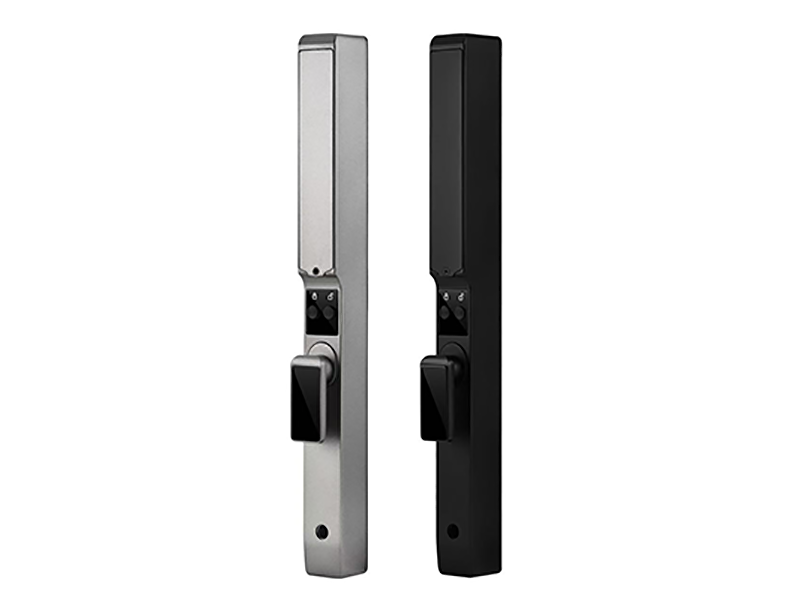
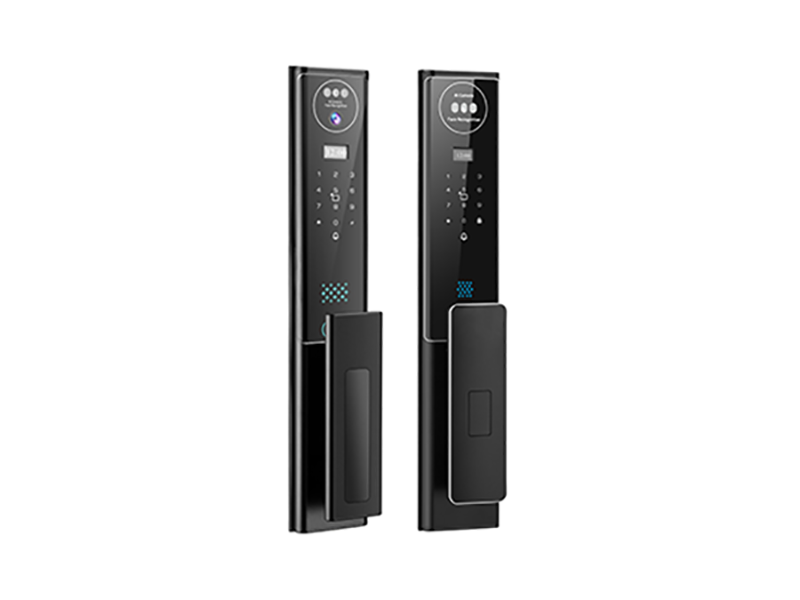
In the development of smart door locks, the introduction of biometric technology represents a milestone leap. It has evolved from traditional verification based on "what you have" (a key/card) or "what you know" (a password) to authenticating "who you are" at its core. Today's Biometric Smart Lock is no longer the application of a single technology but a comprehensive security system integrating multiple advanced biometric identifiers. Among these, next-generation technologies exemplified by the 3D Facial Recognition Smart Lock are redefining the highest standards for entry security.
The Evolution of Fingerprint Recognition: From "Image Copying" to "Liveness Detection"
Fingerprint recognition was the earliest biometric method widely adopted in smart locks, but its underlying technology has undergone fundamental upgrades.
First Generation: Optical Fingerprint Recognition works by scanning a two-dimensional image of the fingerprint for comparison. Its drawback is that it can be spoofed to a certain extent by fingerprint films or even high-resolution photos, presenting an inherent security weakness.
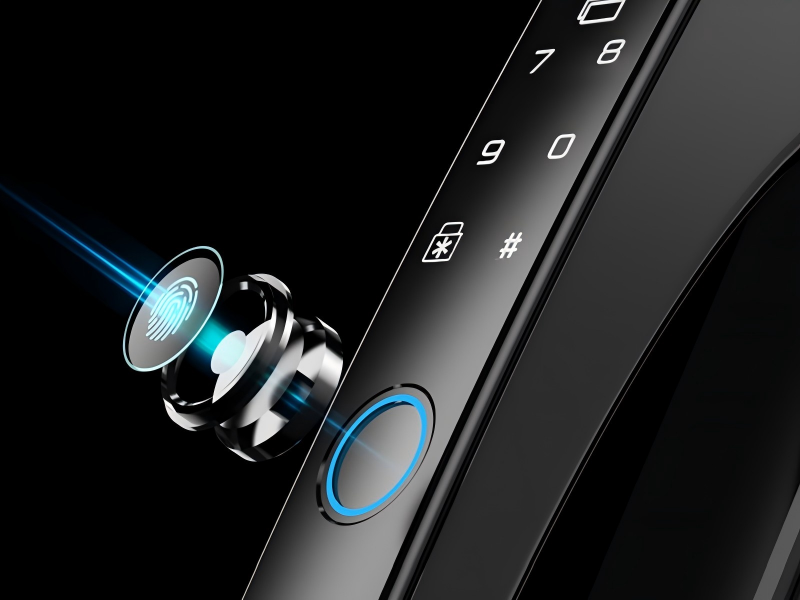
Second Generation: Semiconductor (Live-Scan) Fingerprint Recognition has become the standard in current high-end Biometric Smart Locks. It constructs a fingerprint image by detecting capacitive changes or minute electric fields on the skin's surface, meaning only genuine live skin can be recognized. This effectively prevents spoofing by fake fingerprint films, achieving a qualitative leap in security. This technology is also a core feature of our smart lock products, ensuring exceptionally high reliability in the fingerprint verification process.
The Revolution in Facial Recognition: From "Flat Photos" to "3D Structure"
Facial recognition offers the ultimate convenience of contactless unlocking, but its security levels vary dramatically.
2D Facial Recognition merely captures planar facial features through a camera and is highly vulnerable to being bypassed by high-definition photos, phone videos, or even static masks, posing significant security risks. It is unsuitable as a core access verification method.
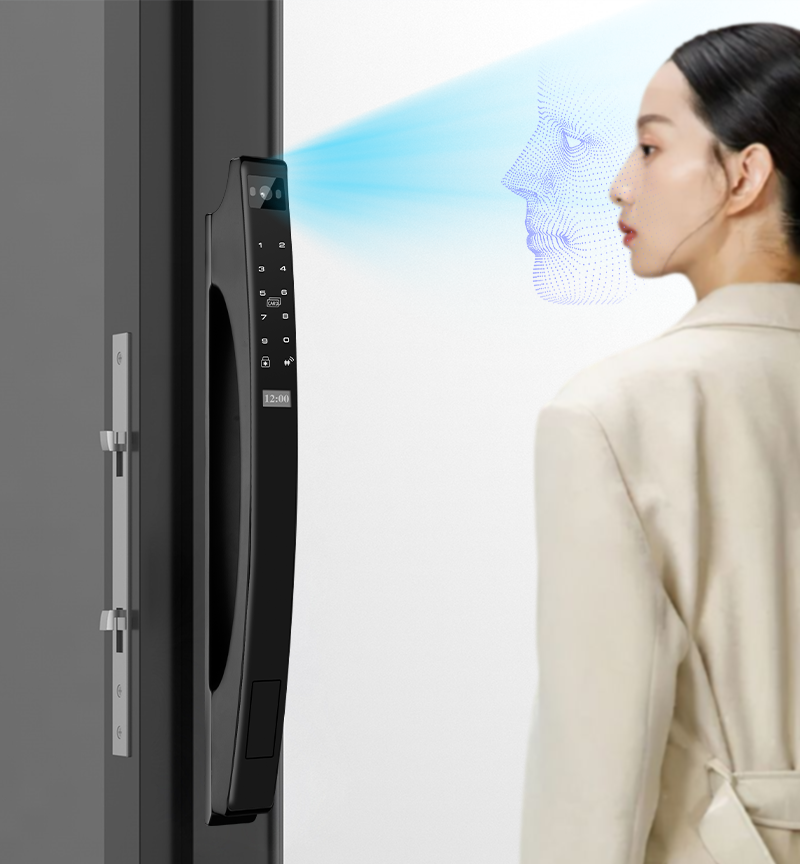
3D Facial Recognition, particularly via Binocular Stereo Vision, is the technological core of today's 3D Facial Recognition Smart Lock. It uses dual cameras to simulate human eyes, capturing depth information to build an accurate 3D facial model. This allows the system to easily distinguish a real face from any form of 2D or static 3D forgery (like photos, videos, or masks). Even in low-light conditions like at night, aided by infrared illumination, it enables fast and accurate identification. Our premium models utilize precisely this safer binocular recognition solution, providing users with a "face-scan" experience that is both convenient and trustworthy.
The Future is Here: Palm Vein Recognition – The "Invisible Key" Within
Beyond fingerprint and facial recognition, more cutting-edge biometric technologies are already being applied in top-tier security scenarios, such as Palm Vein Recognition. This technology uses near-infrared light to scan the pattern of veins beneath the skin of the palm. Vein patterns are internal, invisible to the naked eye, and extremely difficult to copy, offering high uniqueness and anti-spoofing capabilities. Recognition remains unaffected even if the palm surface is wet, dirty, or has minor abrasions. This represents another breakthrough direction for Biometric Smart Locks in terms of security and adaptability, providing a novel option for users with paramount security requirements.
Multimodal Fusion: Building an Impregnable Security Gateway
The most reliable security strategy for a Biometric Smart Lock does not rely on a single technology. The future trend is "multimodal fusion authentication." For instance, in scenarios demanding the highest security level, the system could require simultaneous dual verification via "Semiconductor Fingerprint + 3D Facial Recognition," or combine biometrics with temporary codes or physical keys as multiple fallbacks. This strategy combines the strengths of different biometric modalities, confirming user identity across multiple dimensions, fundamentally constructing a proactive defense system.
The evolution of the Biometric Smart Lock is a history of continuous technological advancement centered on enhancing "uniqueness" and "liveness." From spoof-resistant semiconductor fingerprints to forgery-proof 3D Facial Recognition Smart Locks, and onward to difficult-to-replicate palm vein recognition, each step forward aims to reduce security vulnerabilities further. Choosing a smart lock equipped with advanced biometric technology means selecting not just an innovation in how you unlock your door, but an actively evolving security ecosystem that uses your own biological traits as the key. It makes your door truly recognize its owner, delivering protection that is beyond doubt.